
TONGUE TIE & CHIROPRACTIC

What Is Tongue Tie?
Tongue tie (ankyloglossia) occurs when the band of tissue connecting the tongue to the floor of the mouth — the frenulum — is too short, tight, or thick, restricting the tongue's range of motion. Lip tie is a similar condition affecting the upper lip.
These tethered oral tissues can significantly impact feeding, speech development, and oral function. For newborns, tongue tie is one of the most common underlying causes of breastfeeding difficulty.

Signs Your Baby May Have a Tongue Tie
Parents and lactation consultants often notice difficulty achieving or maintaining a latch, clicking sounds during feeding, slow weight gain or prolonged feeding sessions, maternal nipple pain or damage despite good positioning, excessive gassiness, fussiness, or reflux symptoms, and a visible heart-shaped tongue tip when baby cries.
Not all tongue ties are visible — posterior ties can be harder to identify but equally impactful.

The Role of Chiropractic in Tongue Tie Support
Tongue tie doesn't just affect the tongue. Babies with tethered oral tissues often develop compensatory tension patterns throughout the jaw, neck, and upper cervical spine. This tension can make feeding even more difficult — and if left unaddressed, it can limit the effectiveness of a tongue tie release.
Chiropractic care and craniosacral therapy address these tension patterns by restoring alignment and mobility in the cervical spine and cranial bones, reducing muscle tension in the jaw and suboccipital area, and supporting nervous system function — particularly the vagus nerve, which influences feeding and digestion.
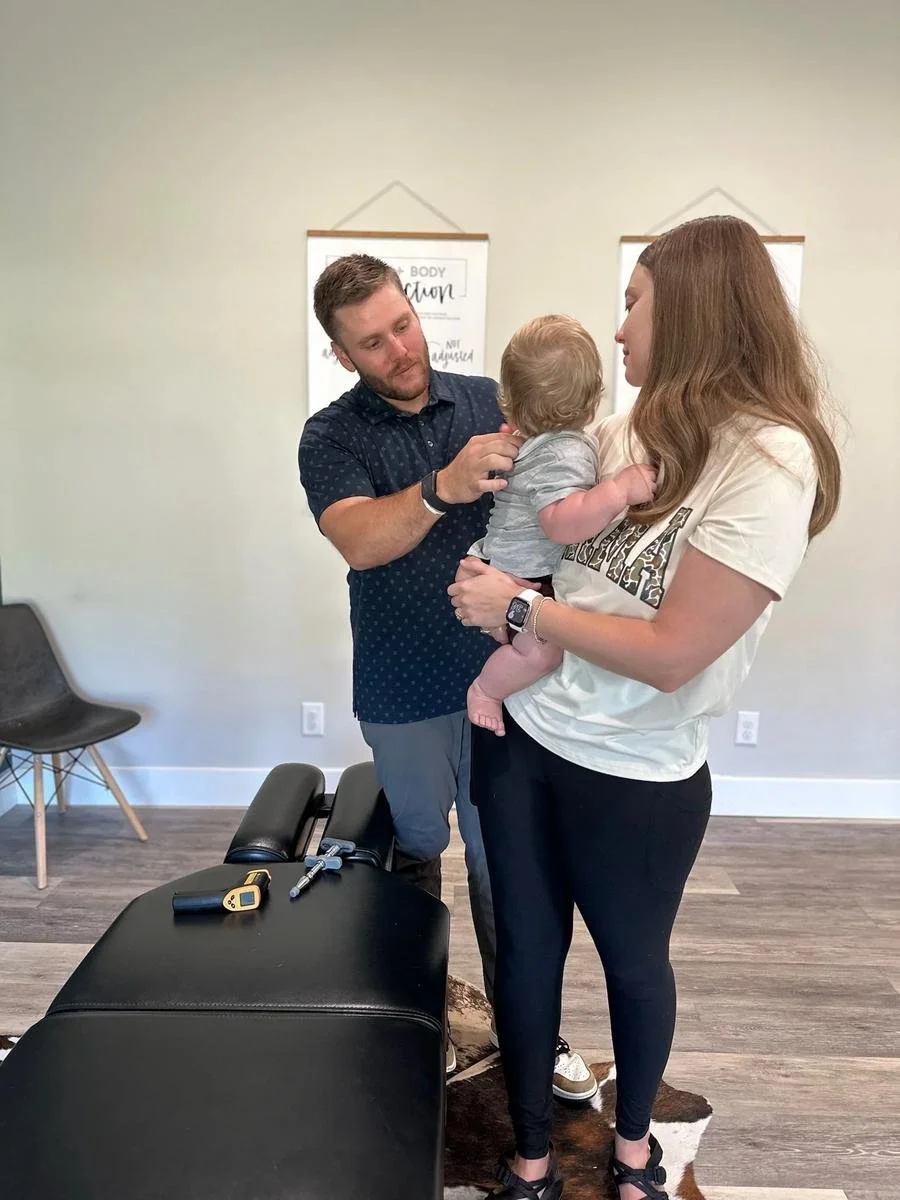
Before and After a Release — How Chiropractic Helps
Before release: Preparing your baby's body with chiropractic and craniosacral work helps reduce tension and improve mobility, which can lead to a better outcome from the procedure.
After release: Continued care supports healing, prevents tension from returning, and helps your baby adapt to their improved range of motion. Many providers who perform tongue tie releases recommend concurrent chiropractic care for this reason.
Our Collaborative Approach
Tongue tie care works best as a team effort. We collaborate with lactation consultants, pediatric dentists, ENTs, and other providers to ensure your baby receives comprehensive support.
Frequently Asked Questions
Still have questions? Take a look at the FAQ or reach out anytime. If you’re feeling ready, go ahead and apply.
-
We address the compensatory tension patterns that develop in the jaw, neck, and cranium — improving mobility and nervous system function to support better feeding.
-
We strongly recommend it. Pre-release care reduces tension and prepares the body for a better outcome from the procedure.
-
Poor latch, clicking during feeds, slow weight gain, excessive fussiness, reflux symptoms, and maternal nipple pain are all common indicators.
-
Yes. Post-release chiropractic and craniosacral care support healing and help your baby adapt to improved tongue mobility, often leading to significant feeding improvement.